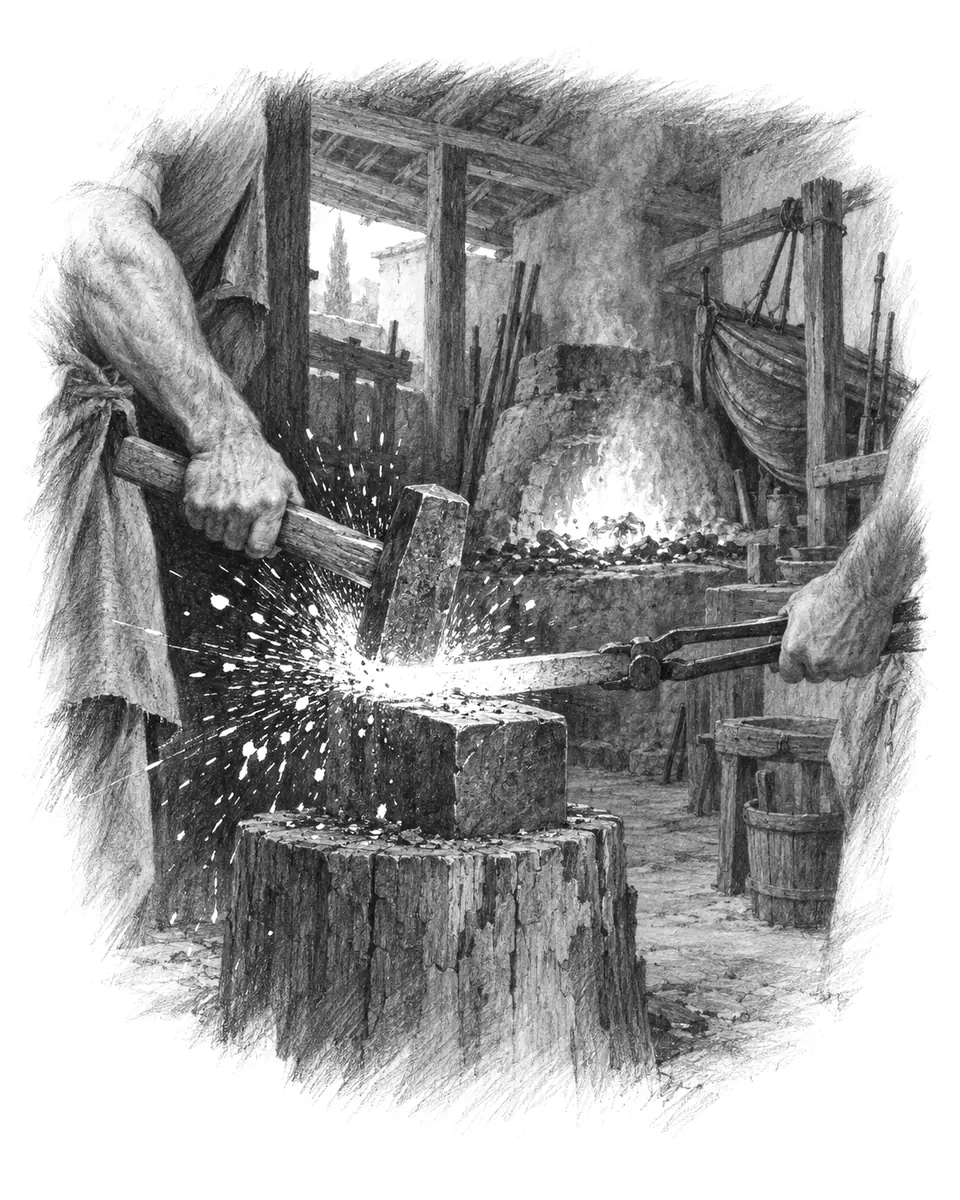
1.Originally a night lamp; later the heat-proof vessel in which metal is melted, refined and cast – the crucible. What goes in is ore and scrap; what comes out has form.
2.Figuratively: a place where something lasting is made from raw matter.
Origin: probably from Middle High German krûse ‘earthen pot’, with the Latin instrument suffix -ibulum. The popular derivation from Latin crux ‘cross’ is folk etymology.